
Data-Driven Retail: Bridging the Gap with Insights & Optimised Staffing
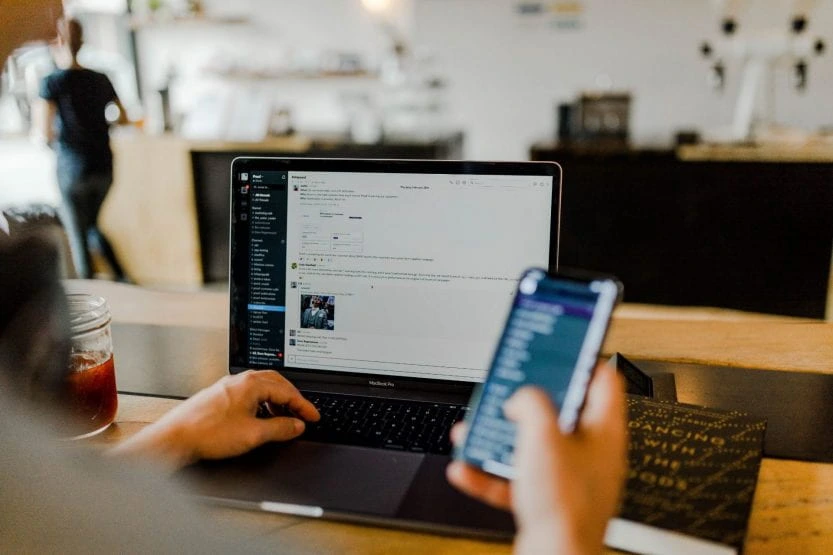
Home delivery is not new to retail. People have been ordering food from the comfort of their homes by calling the restaurants in the 80s and 90s. There would be piles of menu cards lying in the living room. If you feel hungry or don’t feel like cooking, pick up the phone and call the restaurant; within 15-30 minutes, hot food will be delivered straight to your doorstep. You could even order groceries from your local grocery store. Fast forward to the present era, the internet has made it very easy for us to order anything online from the comfort of our rooms. The convenience of online ordering has spread like wildfire, from food to clothing to fresh flowers, and it has undeniably transformed retail markets.
Many brick-and-mortar stores today face tough competition from their online counterparts like Amazon, Temu, Flipkart, etc. To compete with their online rivals, they have taken cost-cutting measures like reducing the number of store employees and money needed for training. This has hurt their main advantage of having informed and knowledgeable salespeople who can help customers in person. As they fight for their survival in the era of online shopping, retailers must understand the need for knowledgeable staff. The retail industry has faced the problem of high turnover because retailers don’t know how to determine the optimal staffing they need at their stores. As labour cost is the second largest expense, they quickly cut staff or even reduce the number of hours for their salesperson, ignoring that salespeople drive sales. Because of high turnover, retailers spend more on recruitment and sometimes may skim on training. One of the critical solutions retailers can adopt to stay afloat in the market is by looking at and analysing historical data, conducting experiments, tracking training and sales of individuals or teams, and offering attractive commissions.
By analysing the historical data on sales associates, such as attendance of sales associates, weekly sales, and payroll, they can compare actual sales figures with the forecasts; if they are down by 10%, increasing staff by 10% would most likely raise revenues by 10%. But they also need to consider other forces that affect sales, such as marketing cost, time, weather, etc.; by collecting data and employing machine learning, retailers can create models to predict sales in-store to optimise staffing levels and other drivers that drive sales. One of the critical advantages of collecting required data to forecast sales and employing machine learning data analysis is that it requires minimal effort but rigorously designed experiments to get more accurate results. When analysing the data, they can see whether their brick-and-mortar stores are overstaffed or understaffed. This approach can easily be used in stores and web stores by recognising that sales associates drive sales even in online stores. Sales associates can encourage customers to register online on their website. Optimising staffing is only part of the solution; it is also crucial that associates are trained with product knowledge to increase sales. Research studies have shown that sales rates have increased by 1.8% for associates who participated in training. The average hourly sales of associates who did the training were 46% higher than those who did not participate.
Another vital part most retailers need to catch up on is customer feedback from potential and existing customers, and sometimes, they even miss out on price-match or price, which may not be the factor customers prefer to shop online instead of in a physical store. It may be the availability, product assortment, or some other aspect of the shopping experience. The point is that gathering all these answers has some promising avenues of opportunities, and this can be backed by collecting feedback from their potential and existing customers instead of relying on their intuition on why customers prefer to shop online instead of going to a physical store.
Retailers should explore other digital channels and integrate their in-store initiatives with an online strategy. Some shoppers will visit stores to examine the products before buying them online. This trend is called “Showrooming”. The research suggests that about 26% reported regularly engaging in showrooming, and 41% were involved in reverse showrooming, that is, looking for products online and going to physical stores to purchase them. Instead of feeling threatened by online shoppers, retailers should research their customer journey and use the insights gained to sharpen their online marketing efforts.
In conclusion, the retail landscape has undeniably shifted towards online shopping. While cost-cutting measures like reducing staff may seem appealing, retail stores must recognise the value of knowledgeable sales associates. Analysing sales and payroll data is a crucial tool to optimise staffing levels. Analysing customer feedback is essential to understanding customer needs to create a seamless shopping experience and bridging the gap between physical and online stores. By embracing these strategies, traditional retailers cannot only survive but thrive in the era of online shopping.
References:
- Retailers Are Squandering Their Most Potent Weapons. By: Fisher, Marshall; Gallino, Santiago; Netessine, Serguei. Harvard Business Review. Jan/Feb2019, Vol. 97 Issue 1, p72-79. 8p. 2 Color Photographs.
- Can You Win Back Online Shoppers? By: Teixeira, Thales S.; Gupta, Sunil. Harvard Business Review. Sep2015, Vol. 93 Issue 9, p117-10. 5p.
- How Pinterest Puts People in Stores By: Sevitt, David; Samuel, Alexandra. Harvard Business Review. Jul/Aug2013, Vol. 91 Issue 7/8, p26-27. 2p. 6 Diagrams.
- Strategy - An International Perspective De Wit, Bob. 2017. Strategy - An International Perspective - (6th ed), 692.